Wednesday, February 12, 2014

Fulbrighters, you continue to impress me.

Was it really as good as I remembered it? I doubted myself in the days leading up to Fulbright's mid-year seminar, constantly wondering if I was remembering the conference with rose-colored glasses. Last year I wrote in my blog about the intriguing presentations about mushroom hunting, indigenous languages in Spain and the U.S., and the connection between Dali's surrealism and the siesta. I recorded memories of a few days of intellectual enlightenment, rest from the day-to-day life at school, and interactions with truly amazing people. Could this year live up to all of that?

The answer:
Yes, sí, oui, ja.
Absolutely.

But first things first. Before I start raving about the seminar, I must give credit where credit is due: to the amazing staff at the Fulbright commission, Tory and Victoria.

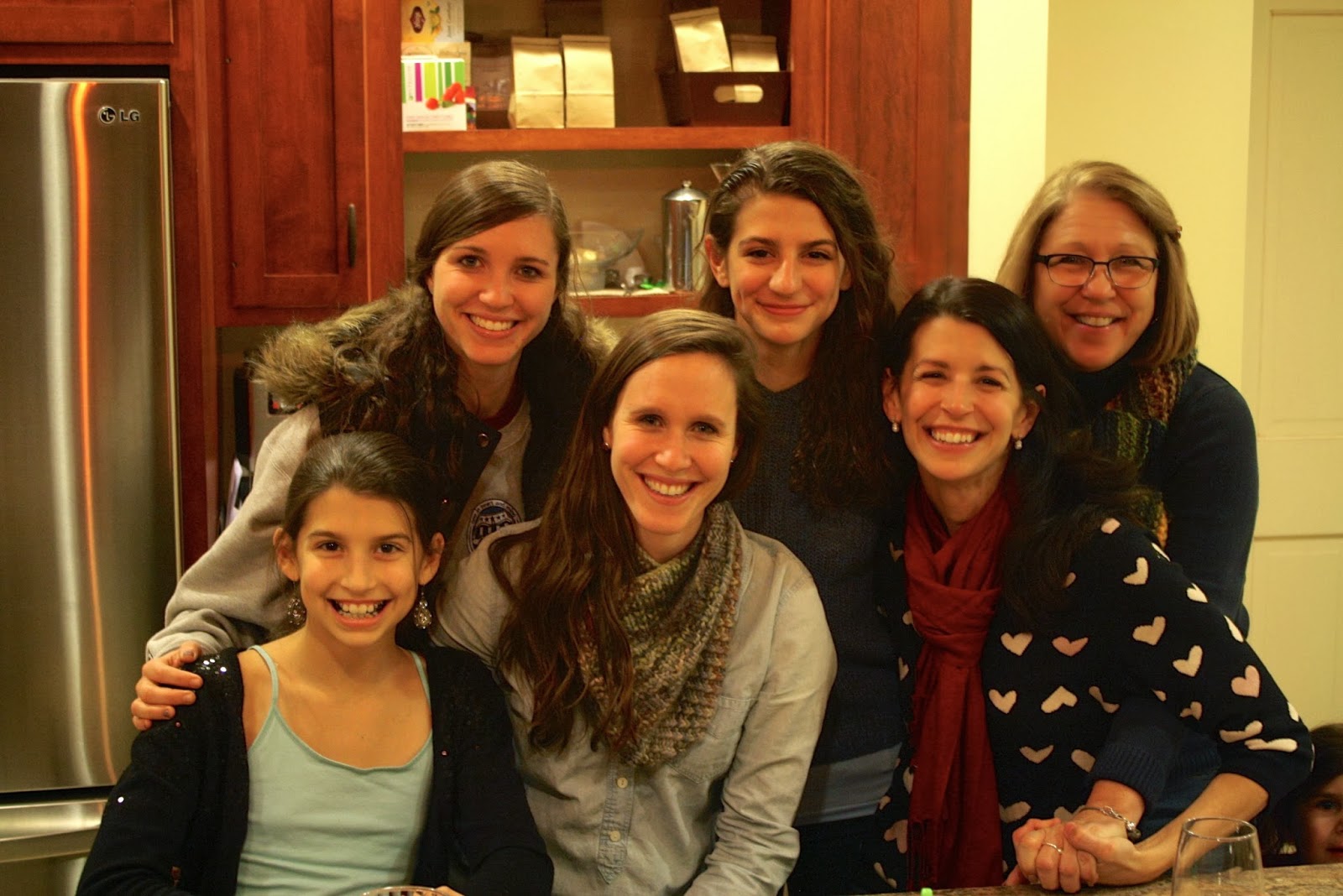
From left to right: Tory (Fulbright program assistant), Victoria (Fulbright program officer), Lauren (co-mentor), and I (hopefully you know who I am) at our last meal of the Fulbright mid-year conference. Not a shabby backdrop either :)

After organizing Madrid's preliminary Global Classroom conferences this year, I realized how much work goes into all of the things we take for granted. Who printed all of our nametags and thought to make them double sided so that even if they got flipped around, we could read them? Who asked the university to set up the coffee breaks outside so that we could soak up some Vitamin D while we drank fresh-squeezed orange juice and coffee between sessions? Who figured out a schedule that would balance the variety of sessions with unique culinary experiences and transportation organization? Tory and Victoria, that's who.

They have helped all of us to make every process as easy as possible. They send us explanations of how to get our residence cards and forward us notifications about events in the city. They selflessly go above and beyond their job description so that we can feel at home and can make the most of our time here. Thankfully, from what I saw at mid-year, most of the Fulbrighters are not letting this opportunity go to waste.

At the mid-year seminar, researchers and ETAs gave 10 minute presentations that left me intrigued about the variety of experiences in Spain. A graduate student explained her studies of active and passive train crossing symbols, explaining the way human behavior forces transportation engineers to figure out ways to "protect us against ourselves". A Madrd ETA talked about her cooking classes and her experiences learning to cook typical Spanish dishes. (I congratulate her on having picked what I consider the best side project ever ;)) Another graduate student summarized her studies on trials of magic in Navarra and, using Victoria as an example, made us realize that a "witch" was really only based on what we agreed upon as a group, not what fit some academian's criteria. (A side note: this researcher also works in a castle.)

Lunches became continuations of these presentations; we were able to engage further with those who had presented and to hear from those who were too humble about their achievements to realize that they would have been interesting to share with the whole group.

Interestingly enough, humility and a sense of inadequacy were themes that I saw consistently throughout the three-day conference. Most presentations started off with a comment similar to:
  • Sorry, this is a terrible PowerPoint presentation...
  • Sorry, this was a dramatic presentation...
  • Sorry, I'm not going to cook for you...
  • Sorry, I lost my voice...
  • Sorry, this is not as exciting as that last performance...
After a while, it began to bother me. Why are these incredible people apologizing so much?! They were entertaining us, enlightening us, engaging us. They had the guts to get up there in front of over 90 Fulbright scholars and talk about something they were passionate about, only to be asked incredibly complex questions about the deeper implications of their research. (These questions, though often impossible to answer, did show that the audience was listening!)

To all of you, I want to say thank you. Thank you for doing what I didn't have the guts to do in the past two years. Thank you for running the risk of over-simplifying your passion in order to share it with us. I know I only caught a glimpse of what you dedicate your life to, but I am thankful you put yourself out there so that I can better understand the varied interests of humanity.

Okay, okay, enough about that. We didn't sit in a lecture hall all seminar; we also got a chance to participate in one of 3 activities: a trip to the Oceanographic (aquarium), a guided tour of the Old Town, or a visit to a robotics lab at Universitat Politècnica de València. 

Since I had already been to the aquarium and am always up for learning more about the history of Spain, I chose the guided tour. Here's a bit of what we saw...

One of many views of the main cathedral

Princess (of Model UN) Lauren

The symbol of Valenica... LOL? ;)
 
One of many PG-13 figures outside buildings. These figures serve to remind people of what they should leave behind before entering the church. In our group, however, they just caused a lot of snickers.

Unfortunately, by mid-day Friday, it was time to say goodbye. Fortunately, the goodbye was softened by a scrumptious plate of paella and wall to wall windows overlooking the ocean.

PAELLA. SOOOOOO GOOD.

And with that, Lauren and I headed off to my next autonomous community, the Balearic Islands. 

I know what some of you are thinking: Islands? Spain has islands?!

Well, yes it does... TWO sets, in fact. The Canary Islands are located 100 km west of the border between Morocco and Western Sahara and the Balearic Islands are located just off the eastern coast of Spain. The location of Mallorca (one of the Balearic islands) made it a perfect place to visit after spending some time on the coast in Valencia.

When we arrived in Palma on Friday night, Lauren and I took a nighttime walk past the huge cathedral and through the main part of the city before stumbling onto (not out of) Wineing, a restaurant specializing in "tapas" of wine. There, rather than settling for a glass of house wine, Lauren and I ordered numerous catas (tastes) of local, national, and international wines. In the end, I stuck mostly to the Mallorcan wines, many of which are some variety of cabarnet, and all of which were quite good. But the best part was indulging in multiple wines that were 6-10 € a glass (Okay... in the states that isn't expensive, but here it's an outrage!) and commenting to Lauren about cedar notes as if I were a sophisticated winer and diner.

Then, Saturday morning, we set out to continue our tour of the center. But first, we had to have breakfast...

Ensaïmadas in Can Joan de S'Aigo

Ensaïmadas are pastries that are fried in a special pork lard, called saïm. They are best explained as a distant relative of the funnel cake, though I think they are better. (And I used to LOVE funnel cake.) It's possible Lauren and I ate ensaïmadas on 3 different occasions over the two days... so worth it.

After breakfast, we took a pleasant stroll along the water. It was a bit windy, but that just meant we could taste the salt of the sea on our lips even after walking away.

Pretty much my ideal Saturday morning

When you turned your back to the water, this is what you saw:

La Seu, the cathedral in Palma, Mallorca

The cathedral was quite impressive, especially for being on a modest-sized island. The style is Roman Gothic and, like many Spanish cathedrals, it is built on the site of a pre-existing mosque. The inside was done partly by Gaudi, whose influence you can see when you look at one of the main chapels, designed by a Mallorcan artist.

An underwater crucifix

The rest of the day was rather calm; Lauren and I had lunch, coffee, tea, and a snack, not so much because we were hungry or thirsty but because we allowed ourselves to check out cute cafés and bars whenever we felt so inclined.

A fire hydrant we found along the way

In one of the cafes, we read about the windmill museum and, thinking it would be a unique activity to partake in, we headed off to find it. Unfortunately, what we found was a museum that looked like it hadn't been opened in years. Fortunately, the windmills in the area were still there for our viewing pleasure.

Getting my Don Quijote on

On Sunday, we headed to Soller, a city on the northern coast of Mallorca.

A welcome sign in Soller

Oddly enough, all of the languages on this sign are quite necessary in Mallorca. Mallorca has (more than) its fair share of German and British retirees, making it difficult to know what language to speak to someone in. (Lauren and I were approached in German multiple times.) I'm used to forcing Spanish into conversations (Waiter speaks in English, Amber speaks in Spanish, Waiter in English, Amber in Spanish, Waiter in Spanish... WIN!) because otherwise most of the Spanish population would use me to practice their English. But a few times during the trip, I conceded to the waiter's English. Why? Because he or she was English or German and Spanish was just unnatural. GEH. European language dilemmas.

Anyway, to get to Soller, we took an old-fashioned train with a number of German retirees and young Mallorcan couples with their small children. We obviousl didn't fit either of the standard profiles, but we didn't mind.
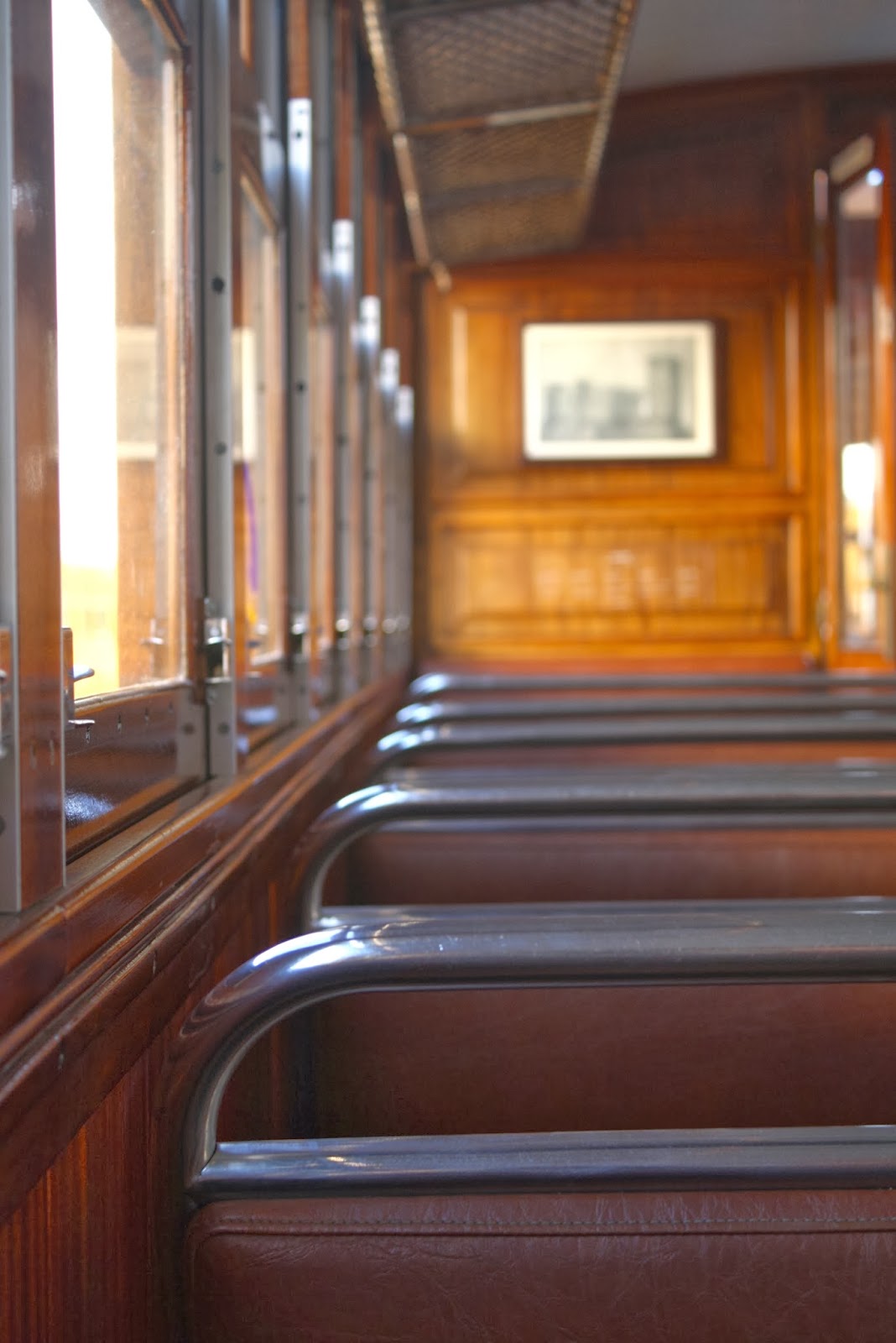
On the train, before it got filled up

We took a pit-stop to check out the view of the mountains.

In Soller, we saw the cathedral and went to a modern art museum in an old house, where we ran into many of the German retirees that had been on our train. Actually, everywhere we went we ran into the German retirees that had come with us. 

Small town. Many tourists. Mostly German retirees.

The cathedral in Soller

Then, when we got to the Port de Sóller, Lauren and I had a glass of orange juice and people-watched for a bit.

Who names their boat "FOX"? Someone who loves Ylvis? 

After a relaxing afternoon and cup of café con leche (the Ana Botella joke is still going for my students...), we headed back on the train to Palma, where we packed up our stuff, had an early dinner (which was deemed socially acceptable because the Brits and Germans tend to eat earlier), and took the bus to the airport to catch our flight home.

When I finally arrived in my apartment at 2 AM on Monday morning (we had a late flight that got delayed), I was tired but joyful. After the unbelievable days I had spent with wonderful people in breathtaking places, what is there to complain about? Fulbright was such an unexpected gift two years ago when I found out that I received the grant, and here I am getting to repeat the experience. I honestly couldn't feel more blessed.

Much love from Spain,
Amber

Wednesday, January 29, 2014

The most wondeful time of the year.

Well, the holiday season has come and gone, and it's time for me to take the time to relive it here in my blog. Here we go...

Thanksgiving.

This past Thanksgiving, I tried to forget it. While I was in classes with students all day, I didn't want to be thinking about the fact that most of my family was together, eating sticky buns and turkey and pumpkin pie without me. So instead of thinking about it, I ignored it.

Before you start feeling sorry for me, I must tell you that my Thanksgiving was far from bad. Sure, the actual day was a bust (except for getting to skype in with the fam for a bit), but I had a fantastic Thanksgiving just a few days prior. Or should I say Thanksgivings.

Yes, in a country that does not celebrate Thanksgiving, on a day that was not Thanksgiving, I had TWO Thanksgiving dinners. I can't complain.

Thanksgiving #1

Who: Half of the Fulbright ETAs, teachers from the Fulbrighters' schools, representatives from the Conserjería de Educación, a few embassy folks, and... oh yeah, THE AMBASSADOR
Where: The ambassador's residence
When: Monday at typical Spanish lunchtime, typical American Thanksgiving dinnertime... 3:00 PM

I must say, I was pretty lucky to have gotten an invitation to this dinner! Last year, all of the Fulbrighters who weren't doing Global Classrooms (not me) got invited. This year, all of the Fulbrighters whose schools were new to Global Classrooms (not me) got invited. However, at some point, someone realized that I had been around for 2 years and had never gotten invited and added me to the list. Whoever that was, I want to publicly thank you. Really, thank you.

I took my camera to photograph my dinner (After all, how many times do you eat at the ambassador's house?), but got a little shy when I got seated at the same table as the ambassador's partner. I wasn't too sure it was socially acceptable to whip out a DSLR at a formal dinner to take pictures of what I was about to eat. But when one of the other ETAs pulled out her iPhone to do it, I decided to just go for it. Yes, I got a few laughs. But I also got a few snapshots to remember my delicious meal.

Turkey, green beans, cranberry relish, and stuffing... mmmmmmmmm!

Feeling official.

 It just wouldn't be Thanksgiving if you had to choose desserts.

 Lauren and I... Fulbright mentors!

 
  Oh yeah, then there was the time I was interviewed on Spanish National Television!

Well, I guess I have fulfilled my 15 minutes of fame for life. I got e-mails and texts for days afterwards, not to mention the weeks of students approaching me, confused, to verify that they really had seen their English teacher speaking Spanish on TV. I think I convinced half of them that I was on TV because I'm famous... sarcasm isn't too easy to detect in a second language. Anyway, if you want to check it out, click the link above and fast forward to 37:00, where the Thanksgiving clip starts.

Thanksgiving #2

Who: My house church and Carmen
Where: Chris & Kara's house
When: Monday at typical Spanish dinnertime... 9:00 PM

Six hours was just enough time to let the food rest and squeeze in a tutoring session before starting the Thanksgiving dinner process all over again. The tutoring session right before dinner #2 meant that I had to take my dish of baked corn into a bar with me, but I was feeling pretty proud of my American tradition and successfully ignored the stares that I got as I sat down with Mohammed to have some coffee and review his paper with a 9x13 pan of corn in front of me. Crazy American. (Yes, this is the same bar where I ran into the glass door. Seems like I'm only reinforcing their stereotype of me as a crazy American....)

The girls at the dinner table. The boys were passed out on the chairs and sofa.

Operación Niño de la Navidad // Operation Christmas Child.

Teaching at Ramiro de Maeztu for a second year has definitely made things easier. I know the best times to make photocopies, I can re-use some lesson plans from last year, and I am getting to know my students on a deeper level. It also made it easier to implement a few extra projects that I wanted to do, like Operation Christmas Child.

For those of you that don't know, Operation Christmas Child is a project run by the NGO Samaritan's Purse. The project consists of sending shoe boxes filled with gifts to children who would otherwise not receive a Christmas present; it is something that I have been doing since I was a little girl with my grandma. Samaritan's Purse has been doing it since 1993 in the U.S. and started it about 7 years ago in Spain. This year, my church in Madrid was a collection point and was trying to do more to involve community members in the project, so I decided I would present it to my students. The project was an absolute hit! At least 50 students were involved and the school packed 24 boxes.

One of my 2° (8th grade) students with the label they put on the top of the box. They had to choose niño (boy) or niña (girl) and an age range: 2-4, 5-9, or 10-14.

 Two more 2° (8th grade) students wrapping the box.

The wrapping process was a bit complicated for many of my students, who sometimes didn't bother to cut off excess paper but instead crumbled it up and put a few extra pieces of tape on the inside to keep it down. Thus, I spent every free hour in the jefe de estudios's office, unwrapping boxes to re-wrap them or fixing up poor tape jobs. But in the end, it was all worth it because they enjoyed the process and were eager to give to kids less fortunate than them during the holiday season.

 A few of the kids who were wrapping their boxes during the recreo.

Shoeboxes from Ramiro de Maeztu. Merry Christmas!

Christmas Cookie Exchange.

Christmas lends itself so well to sharing cultural customs, so I didn't stop with Operation Christmas Child; I decided to also do a Christmas cookie exchange. Over the past year, I have gotten a lot of positive feedback about my baking skills, so I decided it was only appropriate that I try to foster the skill in my students. 

The cookie exchange also went over well... I had 21 groups participate, each with 4 dozen cookies. That's over 80 dozen cookies in one room. I can't guarantee they were all edible, but they at least resembled cookies.
Setting the cookies up for the exchange

Students in line to get their first pick of cookies

Smiles all around! They must not have gotten the blue, flour-flavored or break-a-tooth-rock-hard cookies that I ended up with ;)

A photo contest.

Right before Christmas, Carmen's work had a photo contest on diversity. Carmen wanted to do something working with people, who together create something. So, we copied my idea from Thanksgiving last year to make a tree, with handprints serving as leaves, each with something written on it related to the person as a diverse individual. In the end, Carmen didn't win, but it was a fun afternoon spent getting to meet different people in our neighborhood.

Some kids in action

The end result... if nothing else, it made the bus stop a little more interesting :)

Christmas.

AWESOME. 'Nuf said.

Wedding shower.

After all of the hustle and bustle of a wonderful Christmas, Mom, Ashley (Ali's best friend from high school), and I set to work preparing for Ali's bridal shower...

 
We spent hours making those cookies! Good thing they were super cute!

Mom made the table runners and Ashley made the crafty little mason jars as decorations.

All of the girls of the Fre-Rogers clan at the shower. It's crazy to think that our youngest member is so grown up!

These are just a few of the pictures that I showed my Spanish co-workers in an effort to explain a completely foreign tradition. When they finally got an understanding of it, one said, "No, we don't have that here." Another responded, "Not yet, but just wait until Cortes Inglés hears about it."

Although the day was filled with love and excitement for preparing Ali for her future with Mike, it is true that Corte Inglés (Spain's department store) will probably promote the tradition here and turn it into a consumerist, second-rate version of a very special celebration. This has absolutely happened before; on the 9:00 PM news on Thanksgiving (a different version than the one that is linked above), the Thanksgiving dinner clip was cut short and they spent twice the amount of time covering Black Friday, which is a new tradition in Spain. Awesome. I think Spaniards would be happier if they had imported the tradition of eating turkey with their families and being thankful for all they have. But that's not the best promotional event for going shopping....

Farm show.

Oh, the Pennsylvania farm show... yet another difficult concept to explain to Spaniards. The PA farm show is the largest indoor agricultural exposition in the nation and you can tell. When we first entered, we walked past a cornbox filled with children (like a sandbox but instead of sand, it was filled with corn), and then around a giant butter sculpture before we found ourselves in a maze of "First prize canned peaches" and 6,000 animals. Then, of course, there was the mix of real cowboys/cowgirls and wanna-be cowboys/cowgirls, who milled around the tractors with actual interest while younger versions of my sister and I tried to see how many kids they can fit in the wheels of the largest John Deers.

A rather fashion-forward chicken

But let's be honest, anyone who isn't competing for first-prize goat or vying for an award in the high school rodeo goes for one reason: THE FOOD. (I'm taking my gastro-tourism tendencies stateside.)

Milkshakes made by the PA Dairymen's Association? Delicious.
Potato donuts made by the PA Cooperative Potato Growers, Inc.? Scrumptious.
Maple syrup made by the PA Maple Syrup Producers Council? Delightful. (Especially for some Saturday morning pancakes in Spain!)

What could be better than PA's finest banding together to sell their best products in one food court? Not much. I had been waiting to repeat this experience since 2011 and I must say, it was just as wonderful as I remember it.

You won't ever find a milkshake as good as this one.

Friends and family.

And last, but not least, I got to spend time with my wonderful family and great friends. I spent a morning in NYC and ate a Levain cookie with Hanah. I played game after game (Ticket to Ride, Seven Wonders, Bananagrams, Quirkle, Dominion, Pandemic... if you don't know these, you obviously aren't a serious game person) with my siblings. I spent a morning listening to my grandfather's stories and eating waffles that my grandmother made in her mother's waffle iron. I went on a date with my Dad. I had tea with Natalie. I sat around the fire with my family while the snow blanketed our backyard. I gave hugs to my niece and nephew. I rapped a song at Ali's and Mike's engagement party. I stuffed myself with the food that my mom made (main ingredient: love) and remembered what it's like to eat around a family table instead of at my desk alone in my room. I enjoyed all of the moments that some people tire of because they get to experience them on a daily basis. And it was good.

Nanny and A, on A's 5th birthday

The Rogers girls and Firestine girls
(Please note Phoebe photo-bombing in the bottom right hand corner.)

Tami reading to B on the other side of the Christmas tree

It really was the most wonderful time of the year.

Much love,
Amber

Saturday, January 25, 2014

I (finally) know what you did last fall...

As I mentioned in my last blog, there was a lack of communication on my part the past few months. When I was home, I had a number of chats with friends and family who were wondering what in the world I had been doing with my life. The good news is that I wasn't sitting around, twiddling my thumbs. The bad news is that I did become a bit disconnected with a lot of people that I love dearly. So here is an attempt to catch you up on what's been happening...

Toledo.

It was pretty embarrassing to say that I had been living here over a year and hadn't been to Toledo. Good thing I rectified that situation.

In late October, Joe (the other Fulbright working at my school), and I took the bus to Castilla de la Mancha (also, coincidentally, another autonomous community to check off my list) to spend the day in Spain's previous capital city, located only 70 km south of Madrid.

Toledo is a very old city, inhabited since the Bronze Age, and is a prime example of the rich cultural history of Spain. It is particularly known for having strong influences from Spain's three major religions (Christianity, Judaism, and Islam); you can see this in the upkeep of a well-preserved cathedral, mosque, and synagogue. Everyone who goes there emphasizes the importance of visiting the cathedral, so Joe and I decided to check it out...

Inside the cathedral

Looking up

  I think the U.S. missed the boat on having awesome ceilings.

After checking out the cathedral we investigated a museum with a variety of El Greco works, the city's main synagogue, and a sword shop. Yes, a sword shop. According to Wikipedia, "Toledo has been a traditional sword-making, steel-working center since about 500 BC." Is this still a thriving business, you ask? Well, I did too... to a sword shop owner and apparently it isn't a valid question. He rather proudly told me that he sells swords on a regular basis. All I can say is that Josh and Tami, you are lucky your son didn't receive a sword for Christmas! I think the shop owner was ready to sell me one and B would've loved it! 

On another note...

Castilla de la Mancha is the land of Don Quijote!

 Here's my mandatory food photo: Marzipan and dark chocolate covered hazelnuts. Toledo is one of the possible origins of marzipan and there is actually an EU law designating the percentage of almonds that have to be in products called marzipan. They like to protect the quality of food around here and for good reason; it was delicious!

Overall, the day was a success. Another autonomous community and a quality bonding experience!

Don Benito.

Last year, on Friday and Saturday nights I knew exactly who I was going to hang out with: Napala. One of the nights we would normally hang out with Dan and his roommates, Juan and Juanaco, or Erica and once in a while I would do something with my house group or some of the other dancers from Karen Taft. But in general, there wasn't much mystery in my social calendar.

This year, it hasn't been so predictable. Around 7 on any given weekend night, I pull out my phone and send a few Whatsapp messages, figuring out with whom I will be hanging out with. I'm becoming more spontaneous... slightly more Spanish.

Surprisingly, this method works extremely well in Spain. I don't think that I have ever ended up without something to do and my lack of planning has made it easy to join in on impromptu adventures, like when Carmen invited me to her pueblo during the November puente.

Carmen has ended up being one of my closest friends this year and our friendship began from an intercambio (language exchange). I am normally rather wary of language exchanges because I had a less-than-ideal experience when I was in Sevilla with an older man who only wanted to talk about sororities in the U.S. (He was talking to the wrong girl....). However, Carmen did an intercambio with my British friend, David, last year, and I met Carmen through him when she came to church with him one week. Since then, it has been an easy friendship.

Carmen's parents were extremely welcoming and it was a good experience to see family life in a small pueblo in Extremadura (yet another autonomous community). Here's a visual summary of my experience...

A Roman bridge in Medellín, Badajoz

Migas (crumbs) are a traditional food in Extremadura made with day old bread soaked in water, garlic, paprika, and olive oil. It originates from the traditional meal of the shepherds when they were out for long periods of time with their herds.

Carmen's family's rice fields. Badajoz is the second most important province for rice production in Spain.

Rice fresh out of its shell

Carmen and I outside the Real Monasterio de Nuestra Señora de Guadalupe in Guadalupe, Cáceres. Inside the monastery we saw the traditional robes for the monks, a set of pretty impressive old books (3 feet tall and designed like the old-storybooks that always open up Disney movies), and some artwork.

Overall, the weekend was pretty calm, consisting of eating and taking in a few new sights. However, there were a few memorable moments...
  • On the way to Don Benito, we broke up the trip by stopping for dinner. On my family's road trips, that normally consisted of a stop at a Cracker Barrel, Panera, or general rest stop with a variety of fast food options. With Carmen, that consisted of taking dirt roads just off the highway (normal roads were available... we just didn't take them) and venturing into the center of Trujillo, a small city that hosts the National Cheese Fair in May. (Okay, Trujillo has more historical significance than that but cheese is what I remembered. CHEESE.) We wandered through the small streets in the historical center until we got to the main plaza, where we had a wonderful dinner that included mora, or pig face. It was delicious and if the culinary experience is any indication of what the cheese fair would be like, I might have to consider a trip back for the May puente!
  • On el Día de Todos los Santos (All Saint's Day), I went with Carmen and her family to the cemetery to visit her grandparents' coffins. As we wandered through the raised coffins, it was interesting to see groups of gypsies hanging out throughout the cemetery, the children running around playing and the elderly sitting in chairs that they had brought from home because they anticipated their long stay. But Carmen and her mom seemed to think it was normal, so I followed them to the correct block so they could leave flowers. After visiting the grandparents' grave, Carmen's mom said that we were leaving to find Carmen's father's friend. So we left, wandering through the cemetery once again. After a few minutes of phone calls and wrong turns, Carmen's mom stopped, signifying that we had found him. Looking around, confused, I quietly asked Carmen where he was... the only other people around were two young women. Yes, you guessed it, he was in one of the graves. Oops.
  •  Don Benito had their own sort of Oktoberfest, which basically consisted of one large white tent selling a variety of bottles of German beer. This is hardly worth mentioning except for the irony of experiencing a fake Oktoberfest with a Beatles imitation band in an unheard of Spanish pueblo.
The farm.

Many of you know about my experience WWOOFing from reading my blog back in August. The experience was so wonderful, I couldn't resist the opportunity to return in November. The weather was colder, but the warmth of returning to a familiar experience counter-acted Galicia's chilling rain.

The second time around, I knew the drill and was able to jump right in without any problems. I took care of the chickens and goats, helped cook and... translated for a Sweed. Yep, we had another Sweedish WWOOFer with us who had limited Spanish skills. But it was once again a wonderful experience. I'm hoping I get at least one more chance to go back before the end of my time in Madrid.

To name a few memorable experiences...

I used a machete and milked an animal (a goat) for the first time. To clarify, these things did not happen at the same time. And unfortunately, I don't have photo evidence. But to paint a bit of a picture for you, I got good enough at milking the goat to squirt it right into the cat's mouth as it sat, observing, nearby. Then, seeing the cat quite content, I tried it myself, this time by squirting it into a glass first ;)

Castañas (chesnuts) that we picked up from the side of the road and then roasted over a (closed) fire.

I found out where chestnuts come from, and enjoyed nature's version of Christmas morning by opening up the burrs to find wonderful fruits inside. Then, when we escaped from the rain and drank tea in the afternoons, we roasted some on María's wood-burning stove. I now have a whole new appreciation for the hominess that the lyrics of "The Christmas Song" infer.

Setas (wild mushrooms) that we found in the forest near María's house

We trekked through the rain, searching for mushrooms, and I learned to reject the poisonous ones that left a bitter taste on my tongue when I bit off a piece.

Corn for animal feed

María, Jo (the Swedish WWOOFer), and I spent hours taking the kernels off the corn to store for feed and chatting about our lives.

 This almost makes me consider wanting a pet

The cats surprised me by still being pretty cute even though they had grown out of the undeniably cute kitten phase.

A rethinking of "my" language.

When I was on the farm, I had an unique experience with Jo, the Swedish WWOOFer. Jo really enjoys languages and speaks excellent English; he was playing with words and challenging me on definitions with an authority that I am unaccustomed to in Spain. He also used swear words with an ease that I have never had, using "f*ck" to express delight, surprise, understanding, disagreement, and many other emotions.

Meanwhile, unaccustomed to hearing someone use the word with such freedom and regularity, I attempted to brush it off. After a day or so, however, I couldn't help but discuss the matter. I asked Jo, "Does f*ck in Swedish have a strong connotation?"

His response was no; the word wasn't particularly strong in Swedish. I tried to explain that in English, at least for me, f*ck is a rather strong word and isn't something that you would use quite so lightly. (Amber: María said we are going to go gather chestnuts now. Jo: F**********ck...). I tried to relate to him, saying that I know what it is like to swear in a foreign language and I know that it's much easier to say things you wouldn't say otherwise because it doesn't have the same weight or significance to you. I said, "But for me, when you use that word, it is very strong. Every time you use it surprises me and it makes me feel a bit uncomfortable. I know it's not so strong for you, but it's my language and it bothers me."

It's my language.

Well, Jo didn't respond the way I expected. There was no apology for offending me or promise to change. Instead, he said to me, "It's not just your language. It's all of our language now."

Wow.
Okay.

The truth is, nobody in Spain has ever responded like that when I talk about English. They often take whatever I say as correct, since I am the "native". They apologize every time they make a mistake and look to me as the expert on every idiom, pronunciation, and definition, even though I might have less of a clue than they do. (Unless, of course, it is something they are convinced it is correct, in which case it gets labeled as "British English".)

And the truth is, I don't like being the know-it-all. Okay, I do like knowing it all, but I don't enjoy being the authority on language, mostly because I don't care that much about the details of language. To me, language is, and always has been, a means to an end. An end of meeting new people or having new conversations or describing new cultures. So if I understand someone, I don't care if they said it perfectly. I care about what they said it, not how they said it.

Jo took English as his own as a way that I had not experienced before. He liked the way certain words sounded or the information it opened up to him. And as a member of the global community, he didn't diminish his ability to participate in conversation by doubting his language skills or his right to say something in one way or another. He took complete ownership for his ideas, and for the language he communicated it in. And he is right, nowadays English does not belong to people from certain countries (aka, me); if it is going to be used by everyone, than it must also belong to everyone. So although I still don't love his loose use of the f-bomb, I admire his sense of ownership. Let's see if in the next few months I can convince Spaniards to have this kind of confidence...

A really clean glass door.

Last, but not least, Thursday, I ran head-first into a glass door. In my rush out of a tutoring session and over to Yoigo to pick up my phone (which they had had since December 20th... ugh, the phone saga), I focused too much on saying goodbye to Mohammed and the waiter and not enough on the very clean, completely glass door in front of me. Oops. For those of you who followed Ali's blog when she was in Rwanda, I kind of equate this to a Spanish version of her falling into a massive whole in the ground.

Unfortunately, I don't have a bruise to represent the dull pain I feel, which I was looking forward to twisting into a story about a fistfight to tell all my students. Mostly, I just wanted to see if they would believe that story that their teacher, in a wool pencil skirt and a cardigan, had gotten into, and won, a fistfight.

Alright, that's all for now. Hopefully soon I'll update you on all of the holiday happenings in Madrid and Hershey!

Much love from Spain,
Amber

Monday, January 20, 2014

Global Classrooms Madrid 2014

Better late than never, they say.

This is late. Really late. (Some of you have gently reminded me that I haven't written since Thanksgiving... oops.) But I realized if I just keep thinking of the unrecorded memories, unpublicized photos, and unwritten thoughts, I would never blog about anything again. I thought I had to catch up before I moved forward, but I'm realizing that isn't the way to go about it. Instead I have to deal with the fact that there are a few mystery months in my blog and go forward, catching you up along the way.

So here we go...

When I first applied for Fulbright I wrote, "I believe education should foster a sense of confidence in individuals so that they are willing and eager to contribute to the world around them." I never realized how precisely this statement would sum up my experiences with a Fulbright grant and more specifically, my experiences with Global Classrooms.

If you don't know what Global Classrooms is, you probably haven't talked to me about my job in the past year. For those of you who have heard about (perhaps from last year's blog?) or experienced GC, you probably also know that it has dominated most of my work over the past few months. As the Fulbright ETA mentor, the preliminary GC conferences became my responsibility. I trained the Fulbrighters, worked with Lauren to design an evaluation rubric, met with representatives from the Comunidad de Madrid to decide on the logistics of the conference, and completed a variety of other tasks that come with organizing a city-wide conference involving 41 schools.

The job was not always enjoyable, but I willingly invested extra time in it because I believe that, when done correctly, the Global Classrooms program fulfills my idea of education. It encourages students to take ownership of a perspective that is not inherently their own and to enter into a productive discussion to better the world. Okay, okay... the discussion is only imaginatively productive in physical terms. However, emotionally and educationally, I believe these kids have been marked!

From the administrative standpoint, GC was a huge success. (After all, nobody tried to trade lions.) I was sick the week before the conference, which made it easier to convince myself to stay in the apartment, answering e-mails and reminding people of their responsibilities. It apparently also prompted e-mails from other Fulbrights like this...

Credit: Sean Planchard

I didn't realize that there was a fear of ending up in "Amber's Dog House", but if the fear served as a motivation factor for organization, I'm not complaining!

On the day of the first conference, there was a bit of uncertainty among the Fulbrighters because we hadn't had a group meeting since November. However, many people stepped up to the plate, bringing an appropriate mix of excitement, professionalism, and fun to the experience. The second conference went even smoother, since everyone involved in running the conference was more confident.

 
Dais in one of the rooms

"Momma shark do do, do do do do..."

The "Shark song" was one of the biggest hits of the conference. If you aren't sure what it is, check out this video. The one that was conference-wide famous was a slightly different version, but you can get the idea of the way Fulbrights broke the ice with the students. My favorite part of the conference was probably when a delegation used a "point of personal privilege" (traditionally used for addressing a personal issue... telling the Dais that one is too hot, can not hear, etc.) to ask for the "Shark song" to be repeated before officially closing the conference.

 
My fabulous co-Fulbrighter, Joe, and I

In the end, IES Ramiro de Maeztu (my school), did not make it on to the next conference, which will include the visit to La Asamblea de Madrid, a new topic, new countries, and a chance at the end to nominate a student for the international conference in NYC. This is a bit of a disappointment, mostly because I know that the school is capable of more. (Last year our student was one of the 10 representatives from Spain at the international conference.) However, last year I had 75 students to choose from and 5 months to prepare them, with classes twice a week. This year I had 20 students to choose from (75% of which were signed up to go on the ski trip the same week and 40% of which are not enrolled in the bilingual program) and only 3.5 months to prepare them, in one class a week. So the odds were never in our favor (Hunger Games, anyone?).

But that doesn't mean my students didn't impress me. Check them out...

Two of my students during Moderated Caucus

One of my students with a very large stack of notes from other delegations

But did the GC experience foster a sense of confidence in my individual students? Yes. One of the students who had seemed like a wild card in the initial selection ended up partner-less at the last minute and from that moment, took complete ownership of his work. When he delivered his opening speech during the last class before the conference, it was all I could do to keep my mouth from hanging open as I tried to explain to the student that I was utterly impressed with the work he had done. Another student who was petrified she would stutter the whole way through her speech came up to me mid-conference exclaiming, "I'm not nervous, Amber! I'm not nervous!" Later that day I had to talk to her because she had gotten a little sassy with the Dais in her room. Confidence, check.

And did the GC experience make my students more willing and eager to contribute to the world around them? I hope so, though only time will tell how far they will take what they've learned.

IES Ramiro de Maeztu