Tuesday, May 27, 2014

Global Classroom International: MUN Fun!

As I mentioned in my last post, I was blessed to have been selected by the Fulbright program and the GCI conference committee to participate in GCI 2014 in New York City from May 13-17. However, having only started MUN (Model United Nations) 20 months ago, I was also worried about it; I expected to be be completely out of my league. I knew I would be staffing the conference with individuals who had been MUN delegates for anywhere from 3 to 8 years and were probably much more prepared than I was. Nevertheless, I was welcomed with open arms by MUNers from all over the globe, all of whom seemed to be genuinely good people. After all, they spend their free time researching global issues from the perspective of lesser-known countries, thinking critically to find creative solutions to both age-old and new problems, and then helping middle school and high school kids do the same. You're not likely to get many weeds in that bunch.

 GCI 2014 Staff in the UN

Here are a few anecdotes about the weekend to help you get a picture of my experience...

Opening ceremonies

We snaked students around the UN building and throughout the hallways while we waited for three hours to begin the opening ceremonies. During those three hours, we caught glimpses of indigenous people tramping through the UN headquarters in their traditional garb, ready to represent their people and inspire the delegates to maintain the rights of the people who lived on the land before colonization and megacities. I admit the wait was long, but knowing that real UN delegates were in session discussing important issues made the sarcastic questions from advisers ("Is this the opening ceremonies or the closing ceremonies? We've been here so long I don't even know anymore.") seem somewhat unwarranted and thus easier to bear.

When we finally made it in, the staffers sitting in the back began the blackmail, documenting and publically shaming (on our FB group) anyone who decided to take a snooze.

One of many snoozers. Was this one on #teamnosleep?

Taking it easy

A few months ago, I took a rather lengthy survey that would determine my roommates for the conference. It became clear on the first day that we had all stated our desire to not be part of #teamnosleep on the survey, so I figured my chances of sleep deprivation during the conference were significantly reduced. Our schedules were packed with early (like 6 AM early) morning meetings, late night staff socials, and training and committee sessions all day long. However, my roommates (energetic and social college kids who didn't have to worry about how sleep deprivation would influence their ability to enjoy a week of wedding preparations for their sister's wedding), were quickly drawn in by the thrill of the nightlife in NYC. This led to the following conversation on Thursday night...

Roommate #1: I think I'm going to go out tonight.
Roommate #2: I'm definitely going out tonight.
Roommate #1: Yeah, we took it easy last night, so we should go out.
Amber: Took it easy? I was the first one asleep last night and went to bed at 12:30. I got the most sleep, but I had to wake up at 5:00 to shower and get breakfast before our 6:30 meeting. That's FOUR AND A HALF hours of sleep. That is taking it EASY?
Roommate #1: Well we didn't go out, so yeah...

This was the beginning of many conversations between me and my roommates that basically consisted of:

Roommate: Noticing that Amber has brushed her teeth and is reading in bed in her pajamas... Wait, Amber... aren't you coming out...?
Amber: Thinking of how poorly she was representing Spanish nightlife but at the same time, really not caring... NO WAY, José.

Teacher Amber

The other members of my dais started to chuckle at me after a few days, talking about how they could see my personality and mannerisms switch into teacher mode whenever I saw the students. Then, after a few days they said to me, "Amber, you're such a teacher! It comes to you so naturally. So naturally that now we're starting to doubt which is your default. We thought that you switched out of social mode to go into teacher mode for the kids... but maybe that is your default mode and you have to switch into a special mode to be able to talk to us..."

The kids

Amber: Talking to Ankit as he gets out of the elevator... Ankit, have you seen the kids?
Ankit: No, not yet, have you?
Amber: As the doors are closing... Yep! I just saw two of them!
Doors close on Amber in the elevator with a young female GCI staffer.
GCI staffer: So, uh, you brought kids to the conference?
Amber: Yep, we have ten here with us.
GCI staffer: Ten?!
Amber: Yep, they just got in this afternoon from Madrid with their teachers.
GCI staffer: Ohhhhhhhh, they are students?
Elevator arrives to Amber's floor and the doors begin to open.
Amber: Exiting, Yep! I was in charge of the GC program in Madrid this school year.
GCI staffer: Oh, gosh. Phew! I thought you were a Mom!
Dumbfounded and with her mouth hanging wide open, Amber turns and watches the doors close on the young staffer. A mom?!

Cup point

Throughout the GCI conference, the staff was grouped into different bodies of the UN who were all competing against each other for the infamous 'cup points'. At the end of the conference, the team with the most cup points won the chance to drink out of a special trophy (in the shape of a cup) which seemed to have a huge significance for many other MUNers but to this day is something that I don't understand.

I was, however, a recipient of a cup point... that was awarded on behalf of an adviser. When one of the delegates hailing from Mexico started to feel dizzy during committee, I sat in the hall with her while we contacted all of the necessary supervisors and got permission for the student to be able to go back to her room to lie down. While we waited, we sat and chatted about the six week solo trip around Europe that her parents let her take when she was 17 years old. (Slightly shocked, I had NO problem coming up with more questions to ask her about the trip.)

I fully enjoyed the conversation, AND it gave me a chance to sit down after hours of walking around the room, passing notes between Germany and France and Swaziland and South Africa. Nevertheless, I wasn't about to deny the cup point since our team (which was one of the smaller teams) wasn't doing so well. But my roommate called me out on it when I got back to our room and joked with me, "Amber, you would get a cup point for that! It's not really fair... you're such a mom!"

(Are we noticing a trend? The other staffers thought I was old!)

 HRC (Human Rights Council) Dais - the best dais ever - selfie! HRC is of the three daises that is part of the Functional and Subsidiary Bodies team.

Selfies

I had no idea that selfies were such a big deal. At our USG group dinner, someone tried to take a selfie of us and wasn't able to fit us all in. One of the staffers from the other table took the picture for us, but instructed the guy to stick his arm out so that it looked like he was taking a selfie. Everyone considered this to be #protip (so much #ing and so many pro tips during the week...) worthy and I seemed to be the only person who had missed the memos that selfies had become a desirable look for a photo. Who knew?!

 GC Madrid selfie! Gone are the days when we would ask the teacher standing right next to us to take the picture for us...


Senior Secretariat selfie! And Amber? Somehow the newbie (me) ended up riding back to the hotel in a fancy SUV after the staff social with the people who ran the conference.

The missing passport

On the last morning in New York City, I got a bit of surprise teacher training.

For the first time throughout the whole conference, I was finally going to get the chance to hang out with the students who had come from Madrid. I had passed them a few times coming in and out of the elevators, but we spent all day in different committee sessions and they were out touring New York City with their teachers by the time that I got out of debriefing meetings at the end of the day.

So, on Sunday morning, we all met in the lobby at 9 to leave our bags with the concierge and grab some breakfast before heading out to Ellis Island and the Statue of Liberty. Since the Grand Hyatt is attached to Grand Central Station, we decided to go to Junior's in the food court for some bagels and breakfast sandwiches.

After breakfast, we headed back to the hotel lobby to pick up the stragglers who had overslept and forgotten to pack. Once we met up with them, we did a quick count, only to find that we were missing a student. Seconds later though, Iván showed up. I began to herd everyone out the door, despite the commotion and chatter that seemed to be stalling the movement of our group.

As we approached the exit, one of the teachers came up to me and revealed the reason for the chatter: "Iván lost his passport."

Oh, gosh. Surely it wasn't lost... it had just been momentarily displaced. In packing up to leave he had probably just left in the safe or put it in a different pocket in his bag or threw it in his suitcase or something....

"I had it in my backpack and I left the backpack under the table at breakfast. I just went back to the food court and it's gone."

SHOOT.

Not knowing what lie ahead of us, I sent Ankit, Lucía, and the rest of the students off to Ellis Island, not wanting all of the students to miss out on the big trip of the day. Meanwhile, María Jesús (Yes, Mary Jesus... I know more than one of these here in Spain), Iván, and I began the search.

Upon re-entering Grand Central Station, I asked: the patrolling officers, the people who were sitting at the table where we had been, the workers at the food stands, and, finally, one of the maintenance managers. The maintenance manager explained to me that if he or any of his guys had found a backpack, they would have called the police officers, who would have brought the bomb sniffing dogs over to investigate before touching the bag. Figuring that only 10 minutes had passed and nobody had seen that happened, I didn't expect to get much information from the police. But, after checking with the station manager and searching through the bathrooms and trash cans, we figured it was the next stop.

When I walked in, all I could see was the bald shiny spots on the top of the policemen's heads, since the desk was an awkwardly high height. I stood up on my tip toes to get their attention and then explained the situation. My student's backpack had been lost, his passport was in the backpack, and he was supposed to be leaving for Spain that evening.

The policeman gave us an apologetic shake of his head and told us that they hadn't been called to check out a backpack and customer service was closed, so there was no lost and found to check. Anything that someone else had found would be dropped into the blue box in the corner of the room, which was locked for security purposes and could only be opened by an employee from customer service Monday-Friday, between 8 and 5. But, he had been sitting in the room for the past hour and nobody had dropped off a backpack.

Disheartened, we waited as he wrote down the information for the Spanish consulate and went back to the hotel, where we could make a few calls and begin to get ourselves organized. First we called the consulate, where I ignored their claim that a lost passport is not an emergency, and encouraged Iván to play up the "I'm a 14-year old who is about to get left in New York with no money" card to see what help we could get on a Sunday morning. I called up the Fulbright Program Officer and the head of the bilingual program in the Consejería de Educación to see who would pay for the change in flights (or new flights) and an extra night at the hotel if that became necessary. Iván called his parents and shed his first tears when his mom responded with pure silence, the kind of silence that fills any kid with dread. Then we began a long series of back and forth conversations with the consulate as they tried figure out a way to get the paperwork done on a weekend.

Finally, they called us with the good news that historically, when this has happened to a minor traveling with a group, he or she has been able to fly with the rest of the group with the police report stating the theft and a photocopy of his passport. There were no promises, but there was hope.

As I reported this back to Iván, I saw his face fall at the mention of the photocopy. He put his head in his hands and his chest began to expand with the deep breaths that could not be read as a good sign.

Quietly, I asked Iván, "Iván, is something wrong?"
He slowly looked up at me and said, "The photocopy was in the backpack..."

Thankfully, everything is digitized nowadays and he had a PDF of the photocopy in his e-mail. At least one crisis was averted. The three of us were feeling a little more positive and we headed back to the police station to get the police report for Iván to take to the airport with him.

When we walked into the police station, I glimpsed the shiny bald head and began chattering away, "We're back... apparently if we take the police report he still may be able to board. So we just need to get that report and hope for the best."

Confused, the officer on the other side of the desk stood up and said,"I'm sorry, you're going to have to catch me up. I wasn't here earlier." So, I began to explain the story yet again and when I got to the part about his blue backpack, the police officer asked me, "Did it have school supplies in it?" Surprised by his question, I nodded slowly and felt myself gasp for breath when he said, "The backpack is in that lost and found box."

WHAT?!?!
WAHOOOOOOOOOOO!!!
WE'VE FOUND IT!
OH WAIT.
CRAP.
THAT BOX IS LOCKED.
UNTIL TOMORROW MORNING.

While I tried to explain to the policeman the importance of finding someone to open that box up for me, I became more and more excited about having "found" the backpack. The policeman starts listing off people for me to go talk to when he finally says, "Unless you want to see if you can reach it...."

I ran over to the box, which is very similar in size to a USPS mailbox, but functions like a drop box in that it seals completely when you open it up the whole way. I began to fight to get at the right angle to reach it and when Iván looked in and could see it was his, I decided nothing was stopping me. I tried to get the policeman to get me a hanger, which I planned on using to pull the backpack up to the top with. When he didn't have one (Me: "You don't have a hanger?! Don't you hang up your uniform?!"), I decided to stand on a chair to be able to reach in deeper.

Meanwhile, I apologized again and again to the policeman, hoping he wouldn't get in trouble for my lack of inhibitions. But he stood there calmly and told me, "Don't worry, you're on camera." Not knowing where the camera was, I gave a monologue to the exit sign explaining my actions as we proceeded to tip the box (Policeman: "I've never seen one that isn't bolted to the ground before...") and lie on the floor, reaching into it until the teacher could grab the backpack and pull it out.

As soon as Iván got a hold of his backpack, he opened it up and joyfully pulled out the notebook from the MoMA that he had bought for his sister. (Me: "The passport, Iván, the passport!") María excitedly asked Iván to find the award that he had won the previous day and they happily admired it. (Me: "The passport, Iván, the passport!") Finally, I got him to find his passport that was tucked under everything.

Insert: MASSIVE SIGH OF RELIEF.

Iván and I with the passport in the police station

Needless to say, we were on top of the world. And the policeman was hands down my favorite person of the day.

What a trip! These are some of the more humorous anecdotes, but when I think back on the trip, I also have countless positive memories from committee sessions. I witnessed impressive students from all over the world (Egypt, Germany, U.S.A., Mexico...) use diplomatic language to talk in an educated manner about Unmanned Aerial Vehicles. I observed the U.S.A. delegation maintain their cool in committee when the guest speaker from Amnesty International gave other delegations loads of ammunition (poor metaphor choice?) against their policies. I encouraged as delegations who had been excluded from the major blocs wrote their own resolution in the second to last session (which then ended up being the only resolution be passed by the committee). And most importantly, I met amazing people age 14-25 who inspired me to take MUN with me long after Fulbright ends.

Thank you all for a wonderful experience.
It's been MUNderful.

Un abrazo fuerte a todos,
Amber

Monday, May 5, 2014

Snippets of life in Madrid

About two months later, I'm finally getting around to sharing this written but not posted blog entry about life in Madrid...

Vocabulary lesson

My 2° ESO (8th grade) students read Carl Sanburg's "Chicago" a few weeks ago. There were a lot of difficult words in the poem: hog, brawling, husky, freight, wanton, amid, crooked, etc. But for some reason, they all knew this one: WRECKING.

I came in like a wrecking ball...

I don't know whether to feel happy that my students learned a word from American pop-culture or to grimace at the fact that all of my 8th graders were well acquainted with the video of Miley Cyrus naked on a wrecking ball. The worst part is none of the teachers knew what they were referring to; they kept asking me to explain the pop-culture reference in front of the whole class.

Note to self, Amber: Try to stay in the loop as long as you can.

Winning the lottery over and over again

At mid-year seminar, I was talking to some of the grantees about our application essays and the moments we found out that we had been selected as Fulbright grantees. I recounted my glance at my e-mail while eating dinner at my Kraker kitchen table, not realizing that I was opening an e-mail that has marked my life forever.

Oddly enough, I was also in the kitchen (Perhaps I should hang out in my kitchen more often?) when my phone buzzed last April, notifying me that I had received the e-mail naming the Fulbright Renewals for 2013-2014. Once again, I opened an e-mail that meant a year of extraordinary experiences.

And then last week, at my dining room table, I received the next great news in my professional career: I was selected by the UNA-USA organization to serve as an Assistant Director in the Global Classrooms International Conference in New York City in May!

After dealing with the logistical headaches of expanding the Madrid program from 20 schools to 41 schools and spending hours preparing lessons and presentations and conference materials, I am going to get to see the full potential of the Global Classrooms program: 1,600 delegates from 22 countries, discussing serious world issues (in my room, Uses of Unmanned Aerial Vehicles (Drones)). No big deal. Just AWESOME.

I honestly feel like I am winning the lottery over and over again. And I am so incredibly thankful.

The Women

When I came to Madrid last year, the biggest change was not adapting to a different eating schedule or speaking Spanish all of the time or using public transportation. To be honest, the element of life that I struggled with more than anything else was how to respond to all of the people who are begging, all of the people who are homeless, all of the people who have found themselves in the middle of this crisis without jobs.

What is my responsibility as a fellow human being? What is my responsibility as the hands and feet of Christ?

And the crowds asked him, “What then shall we do?” And he answered them, "Whoever has two tunics is to share with him who has none, and whoever has food is to do likewise." 
- Luke 3:10-11

Then the King will say to those on his right, ‘Come, you who are blessed by my Father, inherit the kingdom prepared for you from the foundation of the world. For I was hungry and you gave me food, I was thirsty and you gave me drink, I was a stranger and you welcomed me, I was naked and you clothed me, I was sick and you visited me, I was in prison and you came to me.’ Then the righteous will answer him, saying, ‘Lord, when did we see you hungry and feed you, or thirsty and give you drink? And when did we see you a stranger and welcome you, or naked and clothe you?
 - Matthew 25:34-40

Whoever closes his ear to the cry of the poor will himself call out and not be answered.
- Proverbs 21:13

It seems so clear. GIVE. But, but, but...

The city of Madrid isn't like Hope College's campus, where I greet people I don't know and people hold the door for me when I am so far away that I feel like I have to run to thank them for it. No, I don't smile at the people on the street or strike up conversation with the person next to me on the metro. I've gotten so used to being in my own little world that I brush past the old couples shuffling along, not thinking of them as persons, but instead as obstacles.

Living in a city, you begin to see so many people as non-persons that it becomes easy to ignore the people who are begging in the same way. I don't have to give them anything if I don't see them.

Furthermore, the brokenness of this world provides us with hundreds of reasons to justify our actions: They could spend it on drugs. They could get a job if they really wanted to. I don't want to make them dependent. I can't help everyone. I'm not swimming in money.

This is an issue that I'm not sure I will ever feel like I fully understand. There are so many arguments in so many different directions that I don't know what is best or right or responsible. But after a few months of having God tugging at my heart last year, I began to give to 3 women who I pass every day on my walk to work: Juana, Glorietina, and Nadia.

In an attempt to set obvious boundaries, I decided to be as consistent as possible. Every Monday, I took them three items from the grocery store. I passed them off to them, smiled as they responded with the dutiful "Que Dios te bendiga" (God bless you), and I continued on my way. A few months into the process, I began to get requests: a whole chicken, diapers, baby formula.

It seemed odd to be fulfilling orders, but I was happy to be able to buy them something they really wanted or needed. And as expensive as diapers are, I know I did nothing special to be born into my middle class family that has more than enough money to take care of ourselves; why should this faultless baby go without diapers?

The months have passed and although we chit-chat once in a while, we haven't formed a real relationship. I don't really have anything to talk to them about, I think. We live in different worlds. I have a job and I'm busy with my own life... I don't have tons of time to be talking to people I don't know on the street. 

And let me be honest... I think I am better than them.
I'm wrong.
When I really think about it, I know I'm wrong.
But that's the thought that goes through my mind.
Way too often.

This past Monday, when I passed off the bags, it didn't take them long to realize that this week I hadn't bought them each a chicken. No sooner did they have the groceries in their hands when Glorietina asked me why I had bought her lentils. I tried to explain that they were healthy and filling, but she just shook her head and asked for ground pork for the next week. I moved on to Nadia, who told me she would rather have a chicken for soup and then proceeded to point out that her friend sits on the opposite side of the street and would also appreciate some food. Then I gave the bag to Juana, who smiled and said, "Como tú lo ves" (How you see it).

As I walked away from the women, I began to think about the days when they were thankful for whatever I gave them. Beggars can't be choosers, right? Who are they to tell me that what I bought them wasn't good enough? I'm pretty health conscious and always tried to buy things that made some sort of meal... shouldn't they be thankful for that?

Now, you'll have to pardon my clearly imperfect analogy here, but I began thinking about how much I identify with their attitude. How often do I ask God for something and moments afterwards, turn around and ask for something more or different? When I have what I need, I ask for things for my friend or my family. I'm never satisfied and I complain if He doesn't give me exactly what I wanted. I'm no longer in awe of the fact that in a world with more than 6 billion people, there's a God who cares enough about me to listen to my prayer requests.

Furthermore, I realized that rarely do I say, "Como tú lo ves." I have a very clear idea of what I want and how and why and that is what is most important. I've forgotten Matthew 6:26, "Look at the birds of the air: they neither sow nor reap nor gather into barns, and yet your heavenly Father feeds them. Are you not of more value than they?"

In the next few months, I am going to have to make some pretty big decisions about where I'm going to live, what school I am going to teach in, and how I am going to deal with the relational ties that are pulling me in every direction. I have a feeling that the next few months will be the perfect time for me to practice letting God give me whatever he sees fit. And when I do ask, I'll try to remember to first say thank you for all of the blessings that I have already been given.

Much love from Spain,
Amber

Sunday, May 4, 2014

Thank you, J. William Fulbright.

"The essence of intercultural education is the acquisition of empathy--the ability to see the world as others see it, and to allow the possibility that others may see something we have failed to see, or may see it more accurately. The simple purpose of the exchange program... is to erode the culturally rooted mistrust that sets nations against one another. The exchange program is not a panacea but an avenue of hope...."
- J. William Fulbright

----------------------------------------------------------

When I graduated from Hope College in 2012, I didn't wear a single tassel or sash to distinguish my achievements. Every single senior walked across the stage with the same navy gown, navy mortar board, and orange '12 tassel. And while I was initially incredibly disappointed that my four years of academic persistence wouldn't be recognized on graduation day, I begrudgingly acknowledged that there was good reasoning behind it. On graduation day at Hope, we weren't celebrating the achievements that any one single student accomplished. Instead we were joyful in the success of our campus community and we acknowledged through our uniformity that we had done it together. Our parents, classmates, professors, friends, siblings, and community members had played vital roles in our successes in college. We were there not because of ourselves, but because of those who had helped us along the way.

As my Fulbright experience is coming to a seemingly rapid conclusion, I have to admit that I didn't get here alone. Besides all of the people who I acknowledged on graduation day, I have to note that my experiences here have only been possible because of the vision of Senator J. William Fulbright and the work of the Fulbright Commission in Spain. I am so thankful that a U.S. Senator realized that "to continue to build more weapons, especially more exotic and unpredictable machines of war, will not build trust and confidence." Instead, he focused on intellectual exchange as a way "to convert nations into peoples and translate ideologies into human aspirations." Thank you, J. William Fulbright for focusing on other countries not as stereotypes or enemies or means to benefit the U.S. government, but as people. Thank you for setting up the framework that allows an average girl from central PA to engage in so many diverse intercultural experiences.

Yes, I know, this is a lot of mushy-gushy Fulbright love. But the reason for it is simple... a few weeks ago, I was surrounded by incredible Fulbrighters from all over the European Union at the 60th annual Fulbright Berlin Seminar. And it was a downright amazing experience.

We put the Fulbright Berlin Seminar in context...

At the opening ceremony, the head of the Fulbright Kommission reminded us of the status of Berlin 60 years ago. In 1954, Fulbrighters struggled to get into Berlin, not having the ease of EasyJet to get into the country. Fulbrighters were only able to get into the country by train, having to travel through the Eastern Bloc and go through various checkpoints due to the Berlin Wall.

Grantees in the 1960s weren't gallivanting around the Shengen zone, enjoying their puentes in various European countries. Their cultural exchange was taxing and difficult and sometimes unsafe. And I have to acknowledge that it is still like that for many Fulbright grantees. Not everyone is having the time of their lives... there are a lot of grantees who have been assigned to small towns in countries with rare languages, where they are confronted with daily challenges that I may not face even on the worst of days. We are all learning a lot, but for some, it's not a walk in Retiro park.

We learned a bit of German...

Since Lauren and I both looked more-or-less German, we were normally spoken to in German by waitstaff and store clerks. And although it was nice to feel like we fit in, we had no idea what they were saying to us. Apparently our confusion didn't read clearly enough on our faces though, because in the bar across the street from our apartment, the woman spoke to us for 90 seconds straight in German, explaining that they were going to have a birthday party and the tables were reserved, before we finally squeaked out, "English?" in a nervous and apologetic tone. She stared at us and said, "OHH! You don't speak German, do you...?"

Thankfully, throughout the week we learned the normal social greetings: hallo (hello), tschüss (bye), bitte (please), danke (thank you), etc. This allowed us to attempt a bit of German with the locals and hint to them (through our terrible pronunciation), that we were trying but were definitely not proficient in the German language. Nevertheless, we gave it our best shot, and would often attempt to translate advertisements and decipher menus. Thus, we learned a few more vocabulary words...
  • Ausgang: exit
    • Amber: "Is this the right exit to get to our street?"
    • Friend: "Yep, we exit to Ausgang... I remember."
    • Amber: "Umm, I'm about 99% positive that ausgang means exit... it's on every exit."
  • Kuchen und Kaffee: Cake and coffee
    • Both of these mandated consumption in Berlin...
  • Hausgemachte: homemade
    • Because everything is better when it is homemade
  • Fass: On-tap (beer)
    • Germany has a very intense beer culture (as you hopefully all knew), so most bars offered a wide variety of bottled beers in addition to the ones on tap. To differentiate between our ordering options, we learned that fass referred to our on-tap options.
  • Frei: free
And, of course, we did some sight seeing...

Lauren and I used our free time to check out some of the tourist attractions in Berlin, including: the Pergamon (not pictured, but AWESOME) and...

Part of the Berlin Wall outside of the Topography of Terror Museum 

The Brandenburg Gate at night 

Part of the East Side Gallery 

The Berlin Cathedral 

Inside the cathedral 

At the top of the cathedral... with the TV Tower in the background

In our tours around Berlin, we also learned a few interesting tidbits of information:
  • The blue and pink pipes that are all over the city (which Ali, Mom, and I thought served as some sort of modern representation of where the wall had been) are used to transport beer and whisky from breweries to restaurants. NOT. That was our tour guide's first and only joke. Actually they are for water and sewage when construction is in progress... they put them underground later on.
  • More people died at the Palace of Tears (the border crossing between East and West Berlin where many people shed tears as they said goodbye to their family members), 200, than at the Berlin wall, 136. This was due to the terrible conditions and long waits at the checkpoints.
  • There were a number of East Germans that were allowed to leave East Germany. They included:
    • Pensioners: The East German government secretly hoped they would stay in West Germany since they were costing them money and weren't useful to them.
    • Athletes: As today, athletic success was used in hopes of showing off the country's success.
    • Musicians and diplomats
  • One of the ways the government checked to see if you were assuming someone else's identity was by looking at your ear. Apparently there are 16 points on the ear that you can compare to verify identity. Maybe I can use that to differentiate between the twins in my 2° ESO English class...
  • The term "protective custody" was used as an "instrument of terror" by the Nazi government to claim that they were protecting the Jews by putting them in concentration camps. The Nazi government said the Jews were at risk of being harmed by other community members and thus were doing them a favor.
I had some memorable interactions with other Fulbrighters...

  • Lauren and I became some German Fulbrighters' token Americans on their last night at the conference. We learned all about their home beers (including how to make the foil cap of one of the bottles into a flower) and forced them into practicing their English before they head off to the U.S.A. for their grants!
  • At breakfast one morning, I offered to get a coffee for one of the Germans at my table. After confirming that he wanted a "normal coffee", it dawned on me that I had no idea what the "normal" way to drink coffee in Germany was. I got two different versions, one American-style normal (americano) and one Spanish-style normal (café con leche) and let him choose his poison. He choose the café con leche, which I secretly wanted, but willingly gave up as penance for my ignorance. 
  • One of the German grantees and I had a nice laugh over one of the speaker's title: Ambassador and Deputy Director-General, International Academic and Educational Relations and Dialogue among Civilizations, Federal Foreign Office, Germany Vice Chair, Binational Board of the German-American Fulbright Commission. I'm personally quite happy I don't have to list that on my resume. It would take up way too much space.
I enjoyed the variety of sessions...
  • At the Opening Ceremony, I let my jaw drop watching a Fulbright play a number of pieces on the marimba (including this one... but better). I'm pretty sure the marimba became one of my favorite instruments after that...
  • I attended a "One Continent... Many Visions" session about gender equality and was surprised at just how many Fulbrighters disagreed with the idea that Europe is the world's model for gender equality. One Fulbrighter had to leave her engineering research project because her male boss didn't trust her to use power tools (which was an everyday necessity for her work). Another explained the stark contrast between a teacher at her school who had taken his wife's last name but regularly made sexist comments about her inability to take control over the class because she was a female.
  • The project presentations blew me away. In a matter of a few hours I listened to a food anthropologist who is studying slow food in Turkey (He has a blog!), a researcher who is traveling from farm to farm in Sweden (SO JEALOUS... maybe I'll look into that in the future...),  and a Slovenia ETA who spends her free time studying advertisement strategies in the Soviet Union. Why are all these people SO interesting?!
  • During the European Dimensions Panel, I completely related to the Fulbright living in Italy who had 5+ slides showing just a few of the gestures her Italian roommate uses on a regular basis. It was nice to hear that someone else had some struggles early on trying to figure how what the locals were saying with their hands...
  • We had an English Teaching Assistant session, where I found out that Spain is the most organized program, thanks to the concentration of grantees in the same kind of school (bilingual high schools) and only two cities. Also everyone was jealous of our Global Classrooms program... by the time we left, the Germans were all eager to recommend that their commission integrate it into the grant. ¡Tomaaaaaaaa!
And, last but not least, I ate... (TYPICAL.)

Mandatory sausage, sauerkraut, and potatoes meal

Repeat of the delicious apple strudel that Mom, Ali, and I had when we were in Berlin over the summer!

Kuchen und Kaffee... heavy on the kunchen :)

(FREE!) Breakfast at the bar across the street from our apartment

A month later, I look back on this experience and am baffled that this was just one of so many incredible opportunities that has been afforded to me. Thank you J. William Fulbright, the Spanish Fulbright Commission, and all of you U.S. taxpayers who just helped fund a program that aims "to bring a little more knowledge, a little more reason, and a little more compassion into world affairs and thereby to increase the chance that nations will learn at last to live in peace and friendship."

Much love from Spain,
Amber

P.S. A shameless plug... Save Fulbright!
P.P.S. The number of J. William Fulbright quotes in this post are proportional to the number of J. William Fulbright quotes that I heard throughout the duration of the conference... :)

Monday, March 31, 2014

Fresh air and kindness in Copenhagen

Lauren and I arrived to the Copenhagen airport on Thursday evening with not a krone in hand or a word in Danish to work with. In an attempt to find the M2 (Metro line), we got on an S-train that would have taken us halfway across Denmark.

Enter: Good-looking, middle-aged, perfect English-speaking Danish man.

Timidly, Lauren and I asked the man across the aisle if he knew if the train went to Nørreport, the Metro stop closest to our airbnb. He said it didn’t, that we had to get off the train and switch to another train. He told us that the stop was coming up and then chatted with us by the door as we waited to arrive at the station. After we all got off the train, Lauren and I paused while we caught our bearings; he walked away and then promptly returned, telling us he was going the same way. We hurried along with him as he suggested that we smoke some pot while we were in the city (Mom and Dad, don’t worry; we didn’t follow his suggestion.) and that we check out the Louisana, a world class modern art museum. Shortly after getting on the metro, Lauren and I arrived at our final stop; we said goodbye to our Danish metro guardian angel and commented to each other on the quite positive first impression we had gotten from the Danish people.

Upon exiting the metro station, Lauren and I dodged a number of bikes, quickly realizing that our confusion was causing a disturbance to the well-orchestrated bike traffic flow. We moved to the side of the road, searched for street signs and when we struggled to see them over the construction of the square, we entered a pharmacy to ask for help.

Enter: Young, hip, perfect English-speaking Danish girl.

We struggled through a pronunciation of the street name and she nodded immediately, somehow understanding our shattered (more intense than broken) Danish. We were only a street or two off, so we left in full confidence of our direction.

However, our confidence didn’t last for long since we didn’t know which of my directions referred to street names and which referred to building names. We were supposed to walk 5 minutes after crossing the bridge but when we walked 10, we knew we had gone too far. We stopped, trying to look at Lauren’s TripAdvisor map through all of the “Points of Interest” (not interesting at the moment, but it worked without data or wifi, so we were thankful), when…

Enter: Mid-30s Danish couple returning to their home with groceries.

The couple had passed us on the corner but after a few paces, they turned around, walked back, and asked us: “Do you need help? Are you lost?” Why yes, in fact we were! We showed them our directions and they chattered away in Danish, talking about a bar that was on the corner of our destination street. They pointed us in the right direction, and once again we wandered off in hopes of success.

When we got to the plaza near our house, we searched for someone to ask, since the couple had suggested we do so when we got closer. I popped my head into the closest kebab, where a number of young men were waiting for a late-night snack or meal. I shyly asked the person closest to me, in English, if he knew where the street I was looking for was, and the storefront quickly became a buzz of discussion. One of the guys explained to me where it was while a number of others caught my eye and pointed in the proper direction.

Enter: Amber and Lauren to the apartment.

FINALLY. It takes a village (of very nice Danish people).

This not-so-short anecdote is just a small snippet of how kind and helpful all of the Danish people we met were. Honestly, the whole weekend was incredible. The euro to krone conversion definitely did not work in our favor, but even as we were shelling out 25€ for lunch, we were completely enchanted. The brisk air was constantly balanced by the warm sun, reminding us of the mythical perfect Michigan spring day and providing a constant comfort as we meandered through the city. We were amazed at the abundance of high-quality activities that we could partake in in the city, and we contentedly settled on doing just half of them since we both vowed to return. For the first time in my life I visited a city that I wanted to live in forever… we had to push ourselves not to “miss” our flights back to Madrid.

But before I make you all want to book the next flight out to Copenhagen, let me tell you about a few of the experiences that made our trip such a hit…

After arriving at the airbnb, we headed out for dinner at Nørrebro Bryghus (the neighborhood's brewery) across the street. Our waiter sat us down and handed us menus to "look over", which was literally all we could do. Look over, not read. Having already established with the waiter that we didn’t speak Danish, we figured that if he gave us Danish menus, it was because they didn’t have English menus. So, we struggled through a few of the descriptions, identifying a few words and figuring we would just ask him for suggestions when he came back.

Tall, blonde, attractive, perfect English-speaking waiter: Did you get a chance to look over the menu?
Amber: Welllllll, we don’t speak Danish.
Waiter: Yes, but did you get a chance to look over the menu?
Amber: We don’t speak Danish… we looked at it, but…
Lauren: The menu is in Danish.
Waiter: Oh, I’m so so sorry! I didn’t mean to give you-my mistake-I’m so sorry I’ll go get you… (continues on with countless apologies).
Lauren: No, we’re sorry! We wish we could speak Danish! We did come to Denmark, we should be expected to know something.
Waiter: No, no.. I’m so sorry, I’ll go get you…

Summary of the meal: Delectable scallops, melt-in-your-mouth beef chuck, impeccable service. It wasn't necessary to know a word of Danish.

On Friday morning, Lauren and I hit up a highly recommended café down the street from our apartment to make our plan of attack. The service continued to astound: "Cappuccino? Small or large? What type of milk? Whole, low fat, or skim? 1.5%, 2%, or 3%? Single or double shot? For here or to go? Cocoa powder?" This is slightly different than the brusk “Dime” (Tell me) that you get from most Spanish bartenders. Then again, in Spain a café con leche will run you €1,50 at a nice bar; our 39 krone cappuccino meant that we had to savor our all €5,25 of our beverage as a special treat.

The coffee

Our map with the anticipation of a 4.2 star, “Will return” TripAdvisor review for the little mermaid statue

Lauren, hard at work or hardly working?

We spent the late morning and afternoon wandering around, enjoying the city...

“Slumming it” with the bacon wrapped hot dog (served in a bread pocket) from the street stand. But man, did they offer customer service! Bacon? Big dog or small dog? Crispy bacon or normal bacon? Ketchup? Mustard? Mayo?

In the land of Tiger!

Lunch: Veal cheek with green onion and cherry tomatoes

One of the canals

A small church on the way to the Little Mermaid statue

I want to be, where the people are // I want to see, want to see ‘em dancing…

Watching the sunset in the park

Dinner: 5 types of herring from the only restaurant that disappointed us in Copenhagen. We trusted the 4 stars on TripAdvisor, but we should have known when it was located right along the most touristy canal that it wasn’t a local favorite.

On Saturday morning, we got up with the plan of making the most of our 24 hour Copenhagen Tourist pass. We knew we wanted to visit the Louisiana, the world-renowned modern art museum just outside of the city, and we had read online that you would save money by buying the Tourist pass since both the train and museum would come included. But we decided to go big before going home, so we first checked out Our Church of the Savior, a church in the south of the city.

The tower

At the top!

A chandelier inside

From the church, we headed to the train station, and stopped at a pastry shop to grab some grub along the way.

A gourmet pop-tart

After eating our “pop-tart” and other snacks at the bus stop, we finally realized that the yellow sign posted on the bus stop was telling us (in Danish) that the buses weren’t running because of all of the people that would be running the World Championship Half-Marathon.

The top runners from all over the world, moments before the start gun went off

So Lauren and I walked across the city, weaving through the thousands of people who were jogging, stretching, and peeing in preparation for the big run. We watched the first group take off and then continued on our way to the train station, where we boarded a regional train to Humleback, the stop where the Louisiana is located.

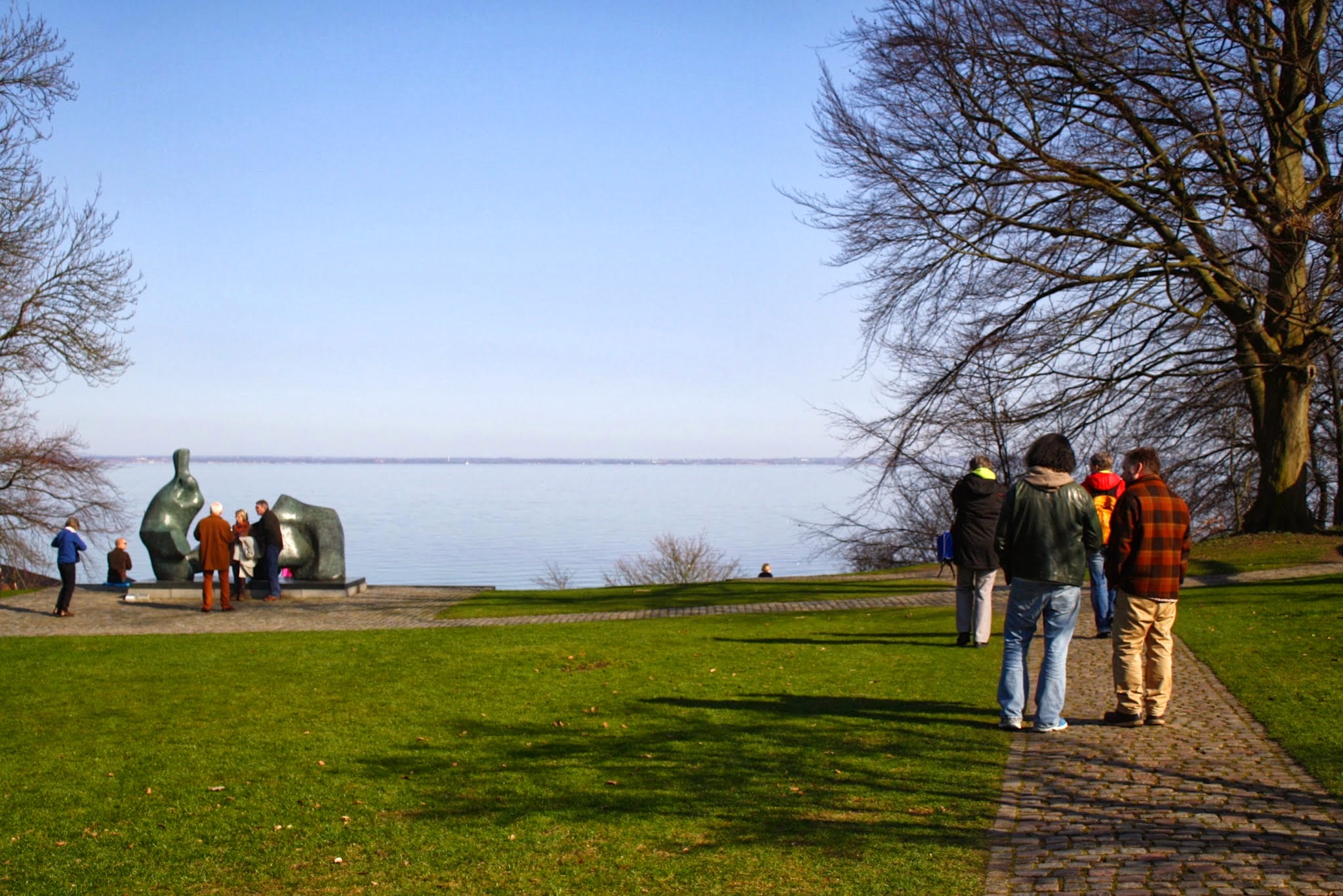
Walking into the sculpture garden at the Louisiana... the land on the other side is Sweden!

One of my favorite pieces was this series of icons, titled: The Inventor of the Steam Engine, The Inventor of the Gravitational Constant, The Inventor of Electricity, The Inventor of the Synthesis of Nitrogen, The Inventor of the Third Law of Thermodynamics. Lauren goes, “Also known as Jesus….” This artist also framed a piece of stained fabric and called it: Yellow with fat and beeswax. Gotta love an artist with a sense of humor, right?

Just one of many rooms that integrated nature into the design of the museum building

On our journey back to Copenhagen, the sun began to set and the sky filled with the warm colors of an almost cloudless sunset. The trees rushed by and I settled into my book having one of those moments of: WOW. How did I ever get this opportunity? Quickly remembering that these were unwarranted blessings, not well-earned rewards, I thanked God and took a few deep breaths, letting the stillness and peacefulness of Hope College’s “Be” chapels wash over me.

Be still, and know that I am God.
Be still, and know that I am.
Be still, and know.
Be still.
Be.
 Psalm 46:10

The trees slowly disappeared though and Lauren and I arrived back in the city's central station. We continued onward with our plans to check out the deli we had read about online, but had been turned away from the afternoon before because of its evening-only hours. When we arrived though, we found it was closed once again (Are the Danish the happiest people in the world because they don’t let their work hours inconvenience their social time?).

So, Lauren and I began the search for the perfect last supper, which became more like "Who has room at the inn?" We walked into about 7 restaurants, only to be turned down because we didn't have a dinner reservation. Mind you, one of those restaurants was a burger joint.

When we were finally welcomed in at a small, hidden wine bar, we ordered red wine and the only entree of the evening, which thankfully was delicious. The cozy evening was the perfect ending to such a beautiful day.

On Sunday morning, we woke up with plans of renting bikes and riding around the city to say farewell. However, after wandering halfway across the city only to find the bike shops closed, we decided it was better to just stroll along the river and eat a leisurely brunch.

A Danish danish!

Now THIS is brunch.

And it was good.

Much love, as always,
Amber

Wednesday, February 12, 2014

Fulbrighters, you continue to impress me.

Was it really as good as I remembered it? I doubted myself in the days leading up to Fulbright's mid-year seminar, constantly wondering if I was remembering the conference with rose-colored glasses. Last year I wrote in my blog about the intriguing presentations about mushroom hunting, indigenous languages in Spain and the U.S., and the connection between Dali's surrealism and the siesta. I recorded memories of a few days of intellectual enlightenment, rest from the day-to-day life at school, and interactions with truly amazing people. Could this year live up to all of that?

The answer:
Yes, sí, oui, ja.
Absolutely.

But first things first. Before I start raving about the seminar, I must give credit where credit is due: to the amazing staff at the Fulbright commission, Tory and Victoria.

From left to right: Tory (Fulbright program assistant), Victoria (Fulbright program officer), Lauren (co-mentor), and I (hopefully you know who I am) at our last meal of the Fulbright mid-year conference. Not a shabby backdrop either :)

After organizing Madrid's preliminary Global Classroom conferences this year, I realized how much work goes into all of the things we take for granted. Who printed all of our nametags and thought to make them double sided so that even if they got flipped around, we could read them? Who asked the university to set up the coffee breaks outside so that we could soak up some Vitamin D while we drank fresh-squeezed orange juice and coffee between sessions? Who figured out a schedule that would balance the variety of sessions with unique culinary experiences and transportation organization? Tory and Victoria, that's who.

They have helped all of us to make every process as easy as possible. They send us explanations of how to get our residence cards and forward us notifications about events in the city. They selflessly go above and beyond their job description so that we can feel at home and can make the most of our time here. Thankfully, from what I saw at mid-year, most of the Fulbrighters are not letting this opportunity go to waste.

At the mid-year seminar, researchers and ETAs gave 10 minute presentations that left me intrigued about the variety of experiences in Spain. A graduate student explained her studies of active and passive train crossing symbols, explaining the way human behavior forces transportation engineers to figure out ways to "protect us against ourselves". A Madrd ETA talked about her cooking classes and her experiences learning to cook typical Spanish dishes. (I congratulate her on having picked what I consider the best side project ever ;)) Another graduate student summarized her studies on trials of magic in Navarra and, using Victoria as an example, made us realize that a "witch" was really only based on what we agreed upon as a group, not what fit some academian's criteria. (A side note: this researcher also works in a castle.)

Lunches became continuations of these presentations; we were able to engage further with those who had presented and to hear from those who were too humble about their achievements to realize that they would have been interesting to share with the whole group.

Interestingly enough, humility and a sense of inadequacy were themes that I saw consistently throughout the three-day conference. Most presentations started off with a comment similar to:
  • Sorry, this is a terrible PowerPoint presentation...
  • Sorry, this was a dramatic presentation...
  • Sorry, I'm not going to cook for you...
  • Sorry, I lost my voice...
  • Sorry, this is not as exciting as that last performance...
After a while, it began to bother me. Why are these incredible people apologizing so much?! They were entertaining us, enlightening us, engaging us. They had the guts to get up there in front of over 90 Fulbright scholars and talk about something they were passionate about, only to be asked incredibly complex questions about the deeper implications of their research. (These questions, though often impossible to answer, did show that the audience was listening!)

To all of you, I want to say thank you. Thank you for doing what I didn't have the guts to do in the past two years. Thank you for running the risk of over-simplifying your passion in order to share it with us. I know I only caught a glimpse of what you dedicate your life to, but I am thankful you put yourself out there so that I can better understand the varied interests of humanity.

Okay, okay, enough about that. We didn't sit in a lecture hall all seminar; we also got a chance to participate in one of 3 activities: a trip to the Oceanographic (aquarium), a guided tour of the Old Town, or a visit to a robotics lab at Universitat Politècnica de València. 

Since I had already been to the aquarium and am always up for learning more about the history of Spain, I chose the guided tour. Here's a bit of what we saw...

One of many views of the main cathedral

Princess (of Model UN) Lauren

The symbol of Valenica... LOL? ;)
 
One of many PG-13 figures outside buildings. These figures serve to remind people of what they should leave behind before entering the church. In our group, however, they just caused a lot of snickers.

Unfortunately, by mid-day Friday, it was time to say goodbye. Fortunately, the goodbye was softened by a scrumptious plate of paella and wall to wall windows overlooking the ocean.

PAELLA. SOOOOOO GOOD.

And with that, Lauren and I headed off to my next autonomous community, the Balearic Islands. 

I know what some of you are thinking: Islands? Spain has islands?!

Well, yes it does... TWO sets, in fact. The Canary Islands are located 100 km west of the border between Morocco and Western Sahara and the Balearic Islands are located just off the eastern coast of Spain. The location of Mallorca (one of the Balearic islands) made it a perfect place to visit after spending some time on the coast in Valencia.

When we arrived in Palma on Friday night, Lauren and I took a nighttime walk past the huge cathedral and through the main part of the city before stumbling onto (not out of) Wineing, a restaurant specializing in "tapas" of wine. There, rather than settling for a glass of house wine, Lauren and I ordered numerous catas (tastes) of local, national, and international wines. In the end, I stuck mostly to the Mallorcan wines, many of which are some variety of cabarnet, and all of which were quite good. But the best part was indulging in multiple wines that were 6-10 € a glass (Okay... in the states that isn't expensive, but here it's an outrage!) and commenting to Lauren about cedar notes as if I were a sophisticated winer and diner.

Then, Saturday morning, we set out to continue our tour of the center. But first, we had to have breakfast...

Ensaïmadas in Can Joan de S'Aigo

Ensaïmadas are pastries that are fried in a special pork lard, called saïm. They are best explained as a distant relative of the funnel cake, though I think they are better. (And I used to LOVE funnel cake.) It's possible Lauren and I ate ensaïmadas on 3 different occasions over the two days... so worth it.

After breakfast, we took a pleasant stroll along the water. It was a bit windy, but that just meant we could taste the salt of the sea on our lips even after walking away.

Pretty much my ideal Saturday morning

When you turned your back to the water, this is what you saw:

La Seu, the cathedral in Palma, Mallorca

The cathedral was quite impressive, especially for being on a modest-sized island. The style is Roman Gothic and, like many Spanish cathedrals, it is built on the site of a pre-existing mosque. The inside was done partly by Gaudi, whose influence you can see when you look at one of the main chapels, designed by a Mallorcan artist.

An underwater crucifix

The rest of the day was rather calm; Lauren and I had lunch, coffee, tea, and a snack, not so much because we were hungry or thirsty but because we allowed ourselves to check out cute cafés and bars whenever we felt so inclined.

A fire hydrant we found along the way

In one of the cafes, we read about the windmill museum and, thinking it would be a unique activity to partake in, we headed off to find it. Unfortunately, what we found was a museum that looked like it hadn't been opened in years. Fortunately, the windmills in the area were still there for our viewing pleasure.

Getting my Don Quijote on

On Sunday, we headed to Soller, a city on the northern coast of Mallorca.

A welcome sign in Soller

Oddly enough, all of the languages on this sign are quite necessary in Mallorca. Mallorca has (more than) its fair share of German and British retirees, making it difficult to know what language to speak to someone in. (Lauren and I were approached in German multiple times.) I'm used to forcing Spanish into conversations (Waiter speaks in English, Amber speaks in Spanish, Waiter in English, Amber in Spanish, Waiter in Spanish... WIN!) because otherwise most of the Spanish population would use me to practice their English. But a few times during the trip, I conceded to the waiter's English. Why? Because he or she was English or German and Spanish was just unnatural. GEH. European language dilemmas.

Anyway, to get to Soller, we took an old-fashioned train with a number of German retirees and young Mallorcan couples with their small children. We obviousl didn't fit either of the standard profiles, but we didn't mind.

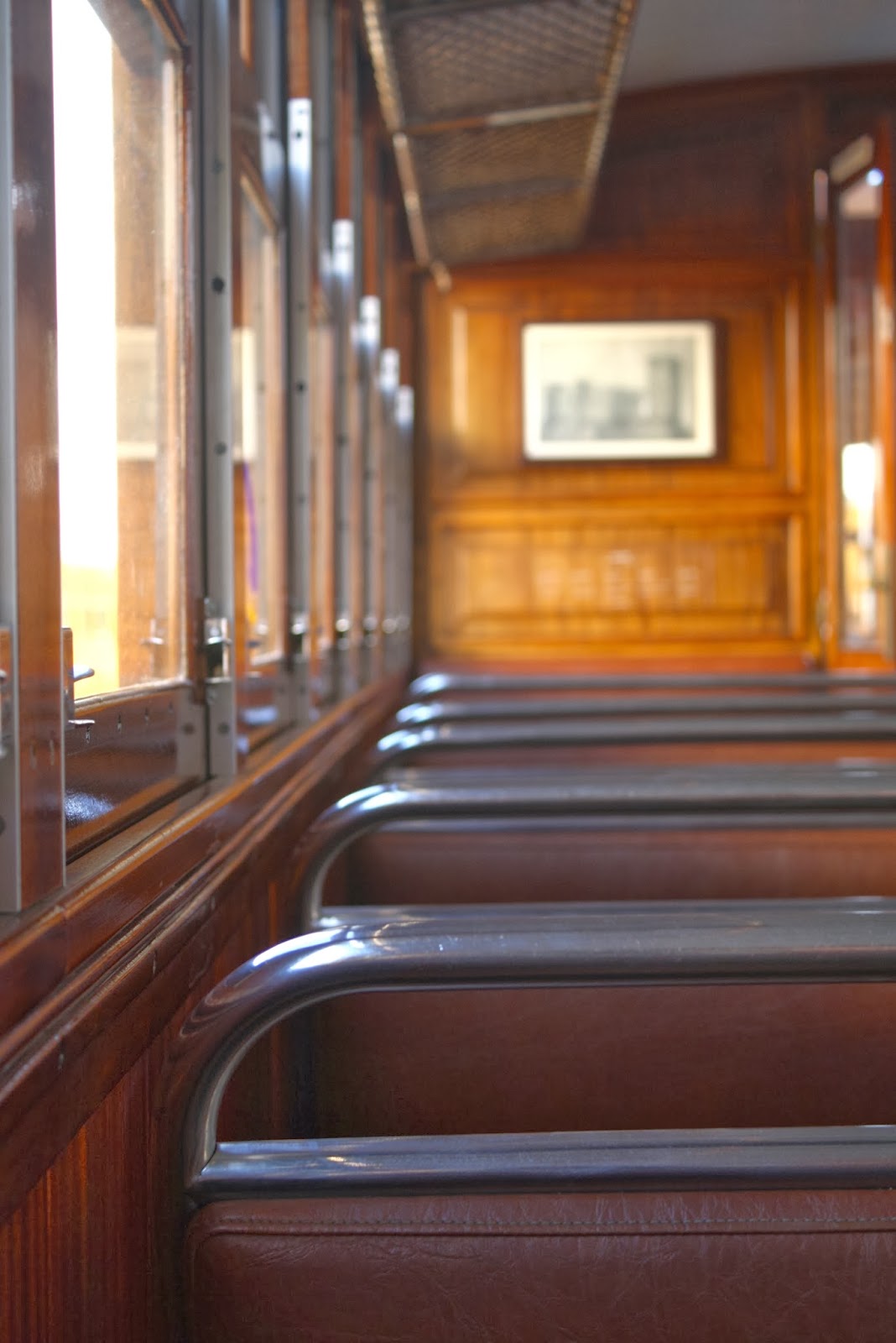
On the train, before it got filled up

We took a pit-stop to check out the view of the mountains.

In Soller, we saw the cathedral and went to a modern art museum in an old house, where we ran into many of the German retirees that had been on our train. Actually, everywhere we went we ran into the German retirees that had come with us. 

Small town. Many tourists. Mostly German retirees.

The cathedral in Soller

Then, when we got to the Port de Sóller, Lauren and I had a glass of orange juice and people-watched for a bit.

Who names their boat "FOX"? Someone who loves Ylvis? 

After a relaxing afternoon and cup of café con leche (the Ana Botella joke is still going for my students...), we headed back on the train to Palma, where we packed up our stuff, had an early dinner (which was deemed socially acceptable because the Brits and Germans tend to eat earlier), and took the bus to the airport to catch our flight home.

When I finally arrived in my apartment at 2 AM on Monday morning (we had a late flight that got delayed), I was tired but joyful. After the unbelievable days I had spent with wonderful people in breathtaking places, what is there to complain about? Fulbright was such an unexpected gift two years ago when I found out that I received the grant, and here I am getting to repeat the experience. I honestly couldn't feel more blessed.

Much love from Spain,
Amber